Best ELD Devices for Small Fleets in 2026: A Buyer's Guide
· Michael R. Holt
Comparing the best ELD devices for small trucking fleets in 2026. Samsara, Motive, Verizon Connect, Rand McNally, and HOS247 — features, support, and what to look for before you buy.
Choosing the wrong Electronic Logging Device (ELD) is a costly mistake for a small fleet. A device that gets decertified by the FMCSA, has unreliable cellular connectivity, or produces logs that don’t hold up during a roadside inspection can expose your operation to Hours of Service violations, out-of-service orders, and mounting legal liability.
This guide breaks down what small fleet operators — typically 1 to 25 trucks — need to evaluate before committing to an ELD platform.
Why Device Selection Matters Beyond Basic Compliance
Every ELD on the FMCSA’s self-certified registry satisfies the legal minimum. The mandate itself is not the differentiator — the operational consequences of your choice are.
A poorly integrated ELD creates three specific risks for small fleets:
- Decertification risk: The FMCSA periodically removes devices from its approved list. If your provider is removed, you are operating out of compliance on every truck running that hardware until you replace it.
- Data gap risk: Cellular dead zones on rural interstate corridors can create unassigned driving time that investigators flag during compliance reviews.
- Driver adoption risk: Drivers who find a system difficult to use are more likely to make logging errors — errors that look like falsification during an audit.
Key Criteria for Small Fleet ELD Selection
Before comparing specific providers, establish your evaluation criteria:
1. FMCSA Registration Status
Verify the device appears on the current FMCSA ELD registry at eld.fmcsa.dot.gov. Do not rely on a vendor’s claim alone — check the registry directly and re-verify annually.
2. Hardware vs. App-Based Systems
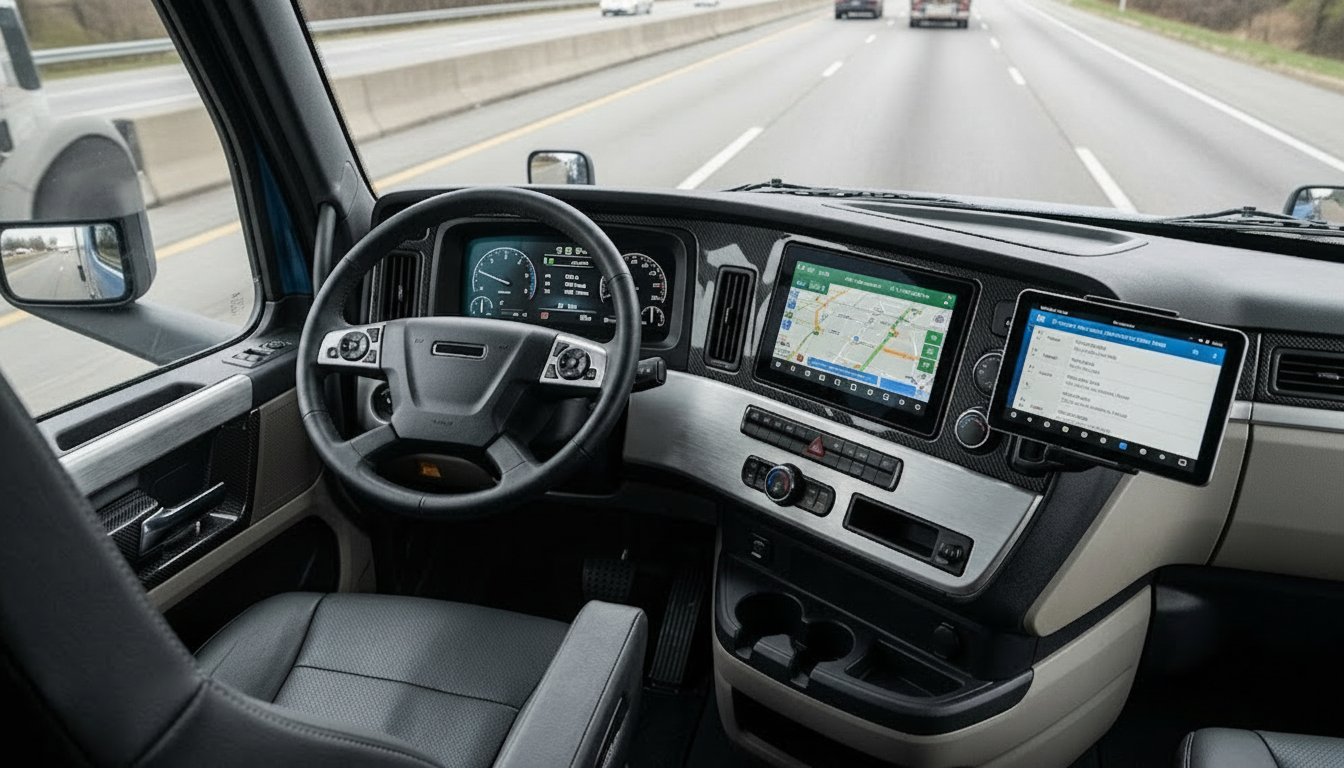
Some ELDs use dedicated proprietary hardware; others run on a commercial tablet or smartphone. For small fleets, app-based systems on rugged tablets typically offer lower upfront costs and easier replacement when hardware fails. Proprietary hardware may offer tighter integration with the truck’s ECM but comes with higher replacement costs.
3. IFTA Mileage Reporting
If your fleet crosses state lines, automatic IFTA fuel tax mileage reporting saves significant administrative time per quarter. Not all budget ELD providers offer this feature — confirm before signing a contract.
4. Driver Vehicle Inspection Report (DVIR) Integration
A compliant ELD must support electronic DVIRs. Evaluate how the system handles defect flagging and mechanic sign-off — these records are among the first documents subpoenaed in a post-accident investigation.
5. Contract Terms and Exit Clauses
Many enterprise ELD providers require multi-year contracts. For a small fleet, locking into a 3-year agreement with an early termination fee is a significant financial risk if the provider raises prices or degrades service quality.
Leading ELD Providers for Small Fleets
The following providers are among the most widely deployed in small and mid-size fleets. Pricing changes frequently — contact each provider directly for current rates.
Samsara
Samsara is the market leader in fleet telematics and offers one of the most complete platforms available. Beyond basic ELD compliance, Samsara integrates AI dashcam functionality, real-time GPS tracking, fuel monitoring, and maintenance alerts into a single platform.
Best for: Fleets that want a single vendor covering ELD, dashcams, and fleet management, and are willing to pay a premium for that integration. Their platform scales cleanly from 5 trucks to 500.
Consider: Samsara requires a multi-year contract. For a fleet of under 5 trucks, the total cost of ownership is higher than simpler alternatives.
Motive (formerly KeepTruckin)
Motive is the dominant choice among owner-operators and small fleets in the US. Their app-based ELD runs on a dedicated Motive tablet or a driver’s existing smartphone, and the driver-facing interface is widely considered the most intuitive in the industry.
Best for: Owner-operators and fleets of 1 to 15 trucks that prioritize ease of driver adoption and straightforward HOS logging without complex telematics overhead.
Consider: Motive’s advanced fleet management features are less robust than Samsara’s at the enterprise level, but for basic ELD compliance and IFTA reporting, it is difficult to beat for the price point.
Verizon Connect
Verizon Connect leverages the Verizon cellular network for connectivity, which provides an advantage in rural corridors where smaller MVNO networks lose signal. Their platform is well-suited for fleets that already use Verizon for business communications.
Best for: Fleets operating in rural or mountainous corridors where cellular reliability is a primary concern.
Consider: Customer support response times have been a consistent complaint in fleet manager reviews. Evaluate their support SLA carefully before signing.
Rand McNally
Rand McNally produces dedicated ELD hardware with an integrated GPS navigation display — combining two functions into a single cab-mounted unit. This reduces driver distraction from managing a separate navigation device.
Best for: Owner-operators who want an all-in-one cab device and prefer dedicated hardware over a smartphone or tablet solution.
Consider: Rand McNally’s fleet management software is less feature-rich than Samsara or Motive. If your fleet grows beyond 10 trucks, you may outgrow the platform.
HOS247
HOS247 is a budget-focused ELD provider with no long-term contracts — a significant advantage for small fleets testing compliance systems or with seasonal operations. Their system supports basic HOS logging and DVIR.
Best for: Owner-operators and very small fleets (1 to 3 trucks) that need straightforward ELD compliance at the lowest possible cost with month-to-month flexibility.
Consider: HOS247 does not offer the advanced telematics, dashcam integration, or fleet analytics that growing fleets will eventually need.
Quick Comparison Summary
| Provider | Best For | Contract | IFTA Reporting | Dashcam Integration |
|---|---|---|---|---|
| Samsara | Full-platform fleets | Multi-year | Yes | Yes (AI) |
| Motive | Small fleets, owner-ops | Flexible | Yes | Yes |
| Verizon Connect | Rural corridor fleets | Multi-year | Yes | Yes |
| Rand McNally | All-in-one cab device | Annual | Yes | Limited |
| HOS247 | Budget, no contract | Month-to-month | Yes | No |
Before You Buy: The Compliance Checklist
Regardless of which provider you select, confirm the following before deploying devices across your fleet:
- The device appears on the current FMCSA ELD registry
- The device records and transmits the eight mandatory data fields (date, time, location, engine hours, miles, driver ID, vehicle ID, carrier ID)
- The system supports data transfer via telematics, email, and USB for roadside inspection
- Your drivers have completed at least one training session on producing a display for an enforcement officer
For a full breakdown of HOS documentation requirements and what investigators analyze during a compliance review, see our guide: ELD Mandate Compliance: Rules, Requirements & Best Practices.
To understand what happens when an ELD malfunctions during a trip and how to document the exception correctly, read: ELD Malfunctions: FMCSA Rules and What to Do at a DOT Inspection.