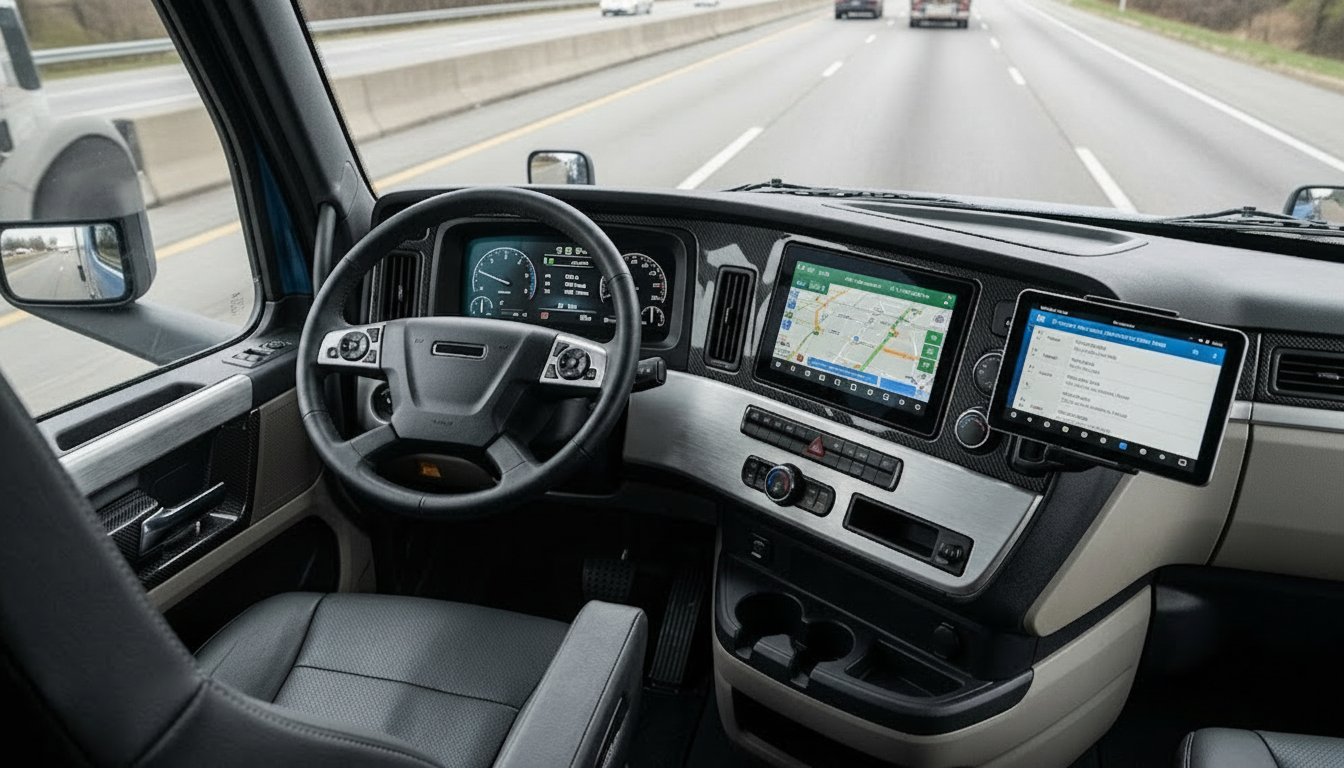
Handling ELD Malfunctions: FMCSA Rules During a DOT Inspection
· Michael R. Holt
Discover the exact legal steps commercial drivers and motor carriers must take when an Electronic Logging Device (ELD) malfunctions to avoid FMCSA violations.
Handling ELD Malfunctions: FMCSA Rules During a DOT Inspection
Few situations cause more panic for a commercial truck driver than a malfunctioning Electronic Logging Device (ELD) moments before a Department of Transportation (DOT) roadside inspection. The FMCSA mandate is clear: failing to produce compliant Hours of Service (HOS) data can result in an immediate Out-of-Service (OOS) order and steep fines for the motor carrier.
However, the FMCSA understands that technology fails. To remain ELD compliant during a malfunction, both the driver and the motor carrier must follow a strict, legally mandated protocol.
Immediate Driver Responsibilities
If an ELD device stops working, loses GPS signal permanently, or fails to record HOS data, the driver must execute the following steps immediately to avoid a logbook violation:
- Notify the Motor Carrier: The driver must provide written notice of the malfunction to their fleet manager or motor carrier within 24 hours.
- Reconstruct the Log: The driver must reconstruct their record of duty status (RODS) for the current 24-hour period, as well as the previous 7 consecutive days. This can be done using paper logs or electronic logging software that is independent of the broken ELD.
- Transition to Paper Logs: The driver must continue to manually prepare their RODS on compliant paper logs until the ELD is serviced, repaired, or replaced.
Critical Note: A driver is only permitted to use paper logs for a maximum of 8 days after the malfunction occurs.
The Motor Carrier’s 8-Day Window
Once the motor carrier is notified of the malfunction, the legal burden shifts to the company. To maintain your status as a compliant fleet, you must adhere to the 8-day rule.
The motor carrier has exactly 8 days from the time of notification to repair, replace, or service the malfunctioning ELD.
Requesting an Extension
If widespread supply chain issues or software failures make it impossible to repair the compliant ELD devices within the 8-day window, the motor carrier can request an extension. This request must be submitted to the FMCSA Division Administrator for the state where the carrier has its principal place of business within 5 days of the driver notifying the carrier.
Surviving the Roadside Inspection
If a DOT officer pulls over a driver operating with a malfunctioning ELD, the driver must be prepared to present specific documentation to prove they are handling the failure legally.
Every commercial vehicle equipped with an ELD must carry an ELD Information Packet onboard. During an inspection, the driver must hand the officer:
- The ELD user’s manual.
- An instruction sheet detailing the data transfer mechanisms supported by the ELD.
- An instruction sheet for reporting ELD malfunctions and record-keeping procedures during failures.
- A supply of blank driver’s records of duty status (paper logs) sufficient to record the driver’s duty status and other related information for a minimum of 8 days.
By presenting the paper logs (showing the reconstructed past 7 days) and the ELD instruction packet, the driver demonstrates full compliance with FMCSA malfunction protocols, effectively neutralizing the threat of a violation.
Upgrading Your Telematics
Repeated ELD failures not only invite DOT scrutiny but also negatively impact your safety scores. If your fleet is constantly battling hardware malfunctions, it is time to upgrade to more robust systems.
Learn how modern telematics not only ensure strict compliance but also reduce your overall liability in our foundational guide: ELD Mandate Compliance: Best Electronic Logging Devices.