DOT Diesel Fuel Placard Requirements: Flammable vs. Combustible Exceptions
· Michael R. Holt
Confused about DOT diesel fuel placard requirements? Learn the exact FMCSA 49 CFR rules for bulk vs. non-bulk transport, UN1202 vs NA1993, and agricultural exceptions.
Transporting diesel fuel across state lines subjects motor carriers to strict Department of Transportation (DOT) and Pipeline and Hazardous Materials Safety Administration (PHMSA) regulations. However, diesel fuel placard requirements are among the most misunderstood rules in commercial trucking.
Because diesel fuel has a higher flash point than gasoline, federal hazardous materials regulations (49 CFR) provide distinct exceptions that allow carriers to reclassify the fuel. Misinterpreting whether your load requires a Class 3 Flammable placard, a Combustible Liquid placard, or no placard at all can result in costly roadside Out-of-Service (OOS) violations.
The Basic Classification: UN1202 vs. NA1993
Under standard DOT hazardous materials tables (49 CFR § 172.101), diesel fuel is classified as a Class 3 Flammable Liquid assigned to identification number UN1202.
However, under 49 CFR § 173.150(f), domestic US motor carriers are permitted to reclassify diesel fuel (which has a flash point between 100°F and 140°F) as a Combustible Liquid. When reclassified for domestic ground transport, carriers typically display the identification number NA1993 or UN1202 on a Class 3 Combustible placard.
The 1,000-Pound Rule for Non-Bulk Packaging
If you are transporting diesel fuel in non-bulk packaging (such as standard 55-gallon drums or smaller individual containers), the DOT applies the “1,000-pound rule” under Table 2 of 49 CFR § 172.504:
- Under 1,000 lbs: If the aggregate gross weight of the diesel fuel and its packaging is less than 1,001 pounds, placards are not legally required on the transport vehicle.
- Over 1,000 lbs: The moment your total non-bulk cargo of diesel crosses the 1,001-pound threshold, you must display the Class 3 Combustible placard on all four sides of the commercial motor vehicle.
Bulk vs. Non-Bulk Packaging Rules
The absolute determining factor for mandatory placarding is the water capacity of the packaging container.
1. Non-Bulk Packaging (Under 119 Gallons)
If you are transporting diesel fuel in drums, transfer tanks, or IBCs where every individual container has a maximum capacity of 119 gallons (450 liters) or less, and the diesel is reclassified as a combustible liquid:
- No DOT Placards Required (subject to the 1,000-lb aggregate rule above): Under the combustible liquid exception, non-bulk packages of diesel fuel are exempt from placarding requirements on US highways provided the total weight stays below 1,001 lbs.
- No Hazmat Endorsement Required: The driver generally does not need a Hazardous Materials Endorsement (HME) on their CDL for non-bulk combustible liquids that fall below the placarding threshold.
2. Bulk Packaging (Over 119 Gallons)
If you transport diesel fuel in any single container, slip tank, or cargo tank trailer with a capacity exceeding 119 gallons:
- Placards Are Mandatory: You must display placards on all four sides of the vehicle or tank — regardless of the actual volume of fuel inside. Even a partially-filled or empty bulk tank that has not been legally purged must retain its placards.
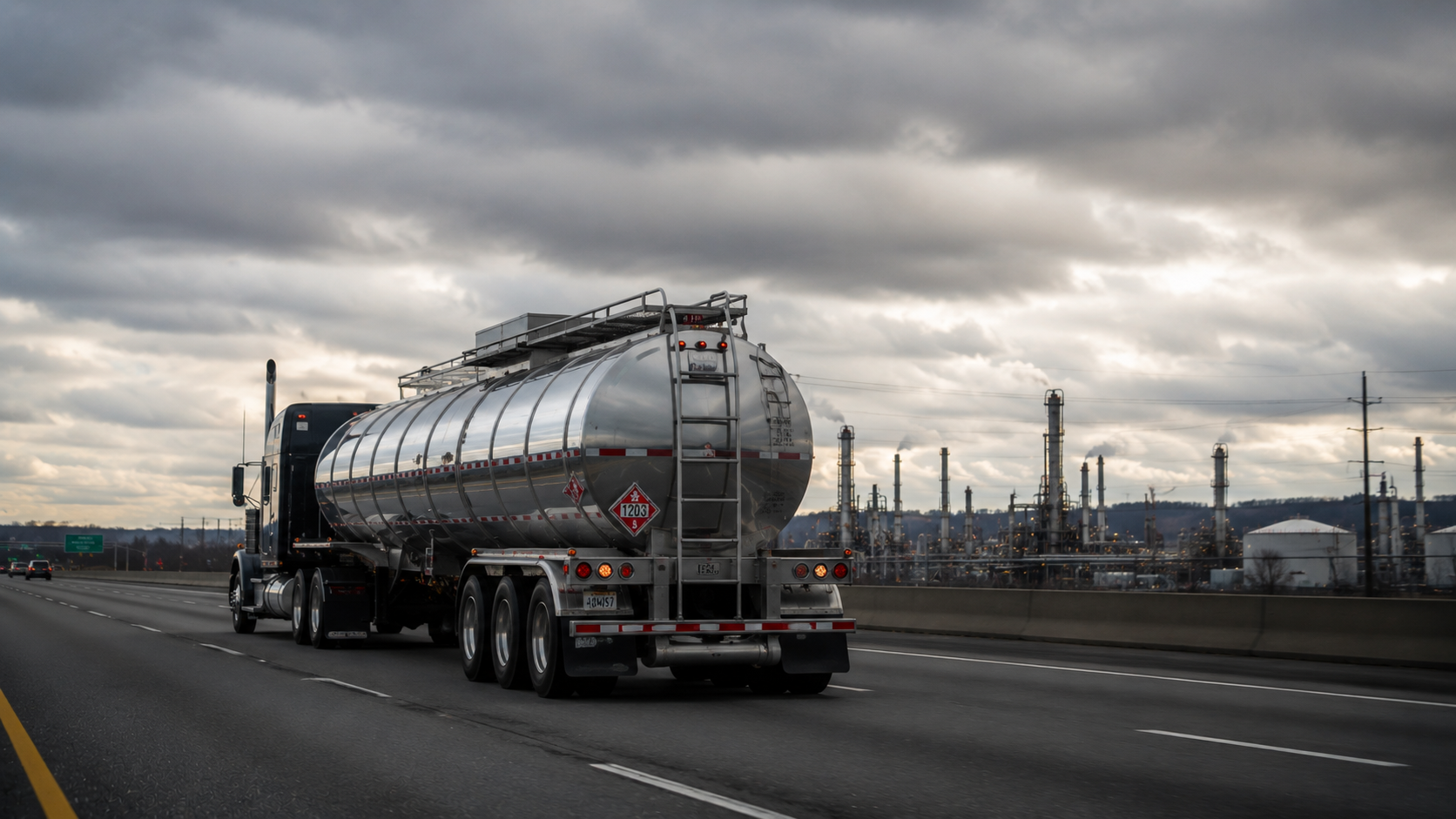
- Placard Type: You must display either a COMBUSTIBLE placard featuring the ID number 1202 (or 1993), or standard red FLAMMABLE placards.
- Driver CDL Endorsement: Operating a vehicle transporting bulk quantities of hazardous materials requiring placards mandates an active Hazmat Endorsement (H/X) and a Tank Vehicle Endorsement (N) on the driver’s CDL.
The Agricultural Exemption (49 CFR § 173.5)
Farmers and agricultural operations moving diesel fuel enjoy significant federal relief. Under federal rules, placarding and shipping paper requirements are waived for local agricultural operations transporting diesel fuel if:
- It is moved by a farmer over local roads between fields or from a distributor to the farm.
- The total amount of diesel fuel transported in a single vehicle does not exceed 502 gallons (1,900 liters).
- The vehicle is operated within a 150-mile radius of the farm.
Note: If the agricultural transport exceeds 502 gallons in a single bulk tank, standard DOT placarding rules immediately apply.
Roadside Enforcement & Compliance Best Practices
When DOT enforcement officers inspect fuel-hauling operations, they focus heavily on shipping documentation and placard visibility. To ensure total compliance:
- Verify Emergency Contacts: If transporting bulk diesel requiring placards, your shipping papers must include a 24-hour emergency response telephone number.
- Keep Placards Clean: Damaged, faded, or dirty placards that are illegible from 50 feet away constitute an immediate DOT violation.
Mastering specific commodity placarding ensures your drivers avoid unnecessary roadside delays and penalties. For a broader overview of baseline hazardous materials regulations across different chemical classes, review our foundational guide: Hazmat Placard Requirements: A Complete DOT Guide.
To understand how hazmat route restrictions apply once your vehicle is legally placarded, consult our breakdown on HAZMAT Route Planning: FMCSA Restrictive Tunnels and Highway Bans.